When you build a cosmetic product, you will usually choose one of three routes: OEM, ODM, or private label. People mix these terms up. But the differences affect your cost, timeline, formula control, packaging risk, and even how smooth your first production run will be.
Want a clear recommendation based on your real situation? Share these details with ATC Sourcing:
- Your product type
- Your target market and country of sale
- Your target price range
- Your packaging style
We will tell you whether OEM, ODM, or private label fits best, and what steps to follow next for sampling, packaging, documents, and delivery. Contact ATC Sourcing here.
Table of Contents
What OEM, ODM, and private label mean in cosmetics
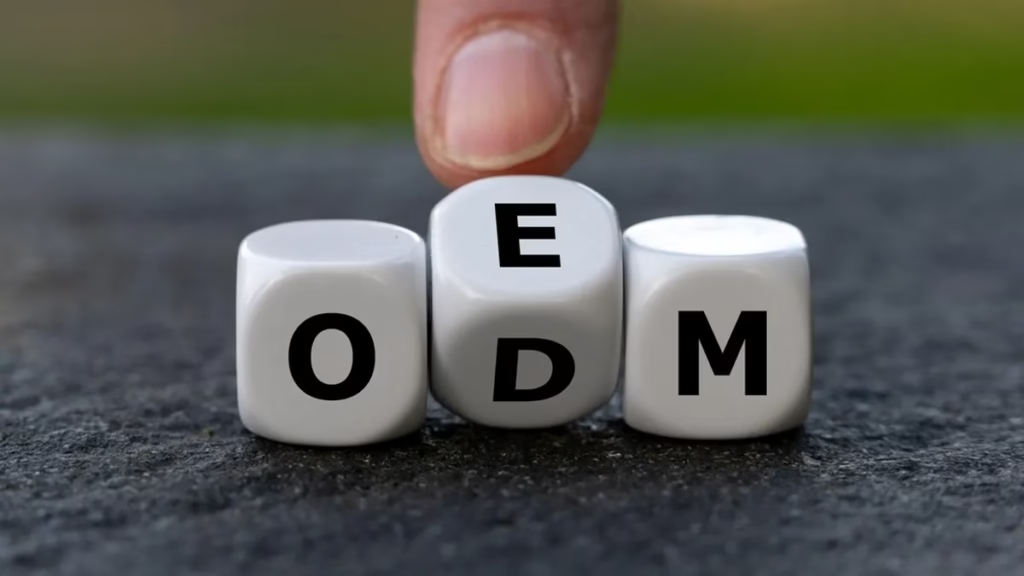
These three models describe who develops the product and how much you can change it.
OEM in cosmetics
OEM means you are asking a manufacturer to produce a product for your brand based on your requirements. In cosmetics, OEM often includes custom formula work, or at least custom specs and a controlled sampling process. You approve a final sample, then the factory produces that exact version at scale.
ODM in cosmetics
ODM means the manufacturer already has developed formulas and product concepts. You select from their existing options, then brand it as your own. Some suppliers allow limited changes, like fragrance type, color direction, or feel adjustments. But you start from their base.
Private label cosmetics
Private label usually means you choose an existing product with very light formula changes, or none at all, and you apply your branding. It is typically the fastest route. It can be a smart choice when you want to test a market quickly or launch a simple product line.
The real differences that impact your launch

Instead of focusing on labels, focus on what changes in real life. These are the areas that matter most.
1) Control over the formula
- OEM: highest control. You define performance targets and constraints, then sample until it matches.
- ODM: medium control. You choose a base formula. Changes are limited by the supplier’s rules and stability limits.
- Private label: lower control. The product is mostly fixed. Your main lever is branding and packaging selection.
2) Speed to market
- Private label: often fastest because the formula is already proven and production-ready.
- ODM: fast, especially if you keep changes minimal.
- OEM: slower because sampling, testing, and packaging compatibility can take time.
3) Upfront cost
- OEM: can require more upfront spend due to R&D time, more samples, and more testing.
- ODM: moderate. Less development work, but you still pay for sampling, packaging, and approvals.
- Private label: often lower upfront cost because development is minimal.
4) Risk during sampling and packaging
Most painful delays do not come from “bad factories.” They come from unclear expectations, rushed packaging decisions, and weak approval checks.
- OEM carries more process risk because you do more development steps.
- ODM reduces formula risk but packaging and labeling errors can still happen.
- Private label reduces formula risk further, but brand owners still get caught by packaging fit issues, label mistakes, or missing documents.
OEM cosmetics: how it works in practice
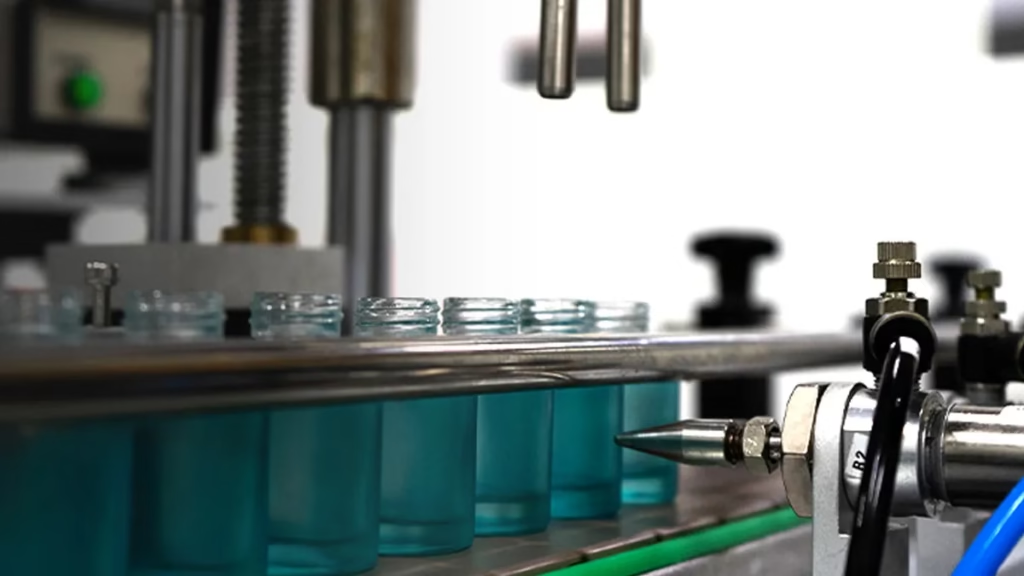
OEM is the right choice when you want a product that feels unique and you are willing to manage the development steps properly. It is also the route where a clear process matters most.
Step 1: Write a product brief that a lab can use
A good brief is not long. It is specific. It tells the lab what success looks like.
- Product type and format (cream, gel, balm, liquid foundation, shampoo, EDT style fragrance, and so on)
- Target user and use case (daily, sensitive skin, oily hair, salon-grade, hotel amenity)
- Performance goals (finish, absorption, slip, wear time, foaming level, scent strength)
- Constraints (fragrance-free, silicone-free, no essential oils, vegan direction, specific allergens to avoid)
- Where you will sell (this affects labeling rules and some compliance choices)
Step 2: Sampling and feedback loops
Sampling is not “try and hope.” It is controlled iteration.
- You receive a sample and a spec summary.
- You test it in a consistent way. Use the same environment and compare side-by-side.
- You give feedback that the lab can act on. For example: “less sticky,” “less fragrance,” “faster absorption,” “more slip,” “reduce white cast.”
- You repeat until the sample matches your targets.
If your feedback is only “I don’t like it,” the loop will take longer. That is just reality. Labs need measurable direction.
Step 3: Packaging compatibility before you lock production
Packaging is not only design. It is a functional part of the product.
- Pumps can clog depending on viscosity or particle size.
- Caps and wipers can change the user experience in makeup products.
- Some materials can cause formula drift over time.
- Labels can wrinkle, peel, or fail if adhesives do not match the surface.
This is why smart teams test the product in the final packaging early, not at the end.
Step 4: Pre-production sample and production match
Before full production, you want confidence that the factory can reproduce the approved sample at scale. Many brands skip this step and then wonder why the first batch looks slightly different.
At this stage, you confirm:
- appearance and smell
- viscosity range or texture feel
- fill weight and fill level
- label placement and print match
- carton assembly and packing method
ODM cosmetics: what to expect and what to ask
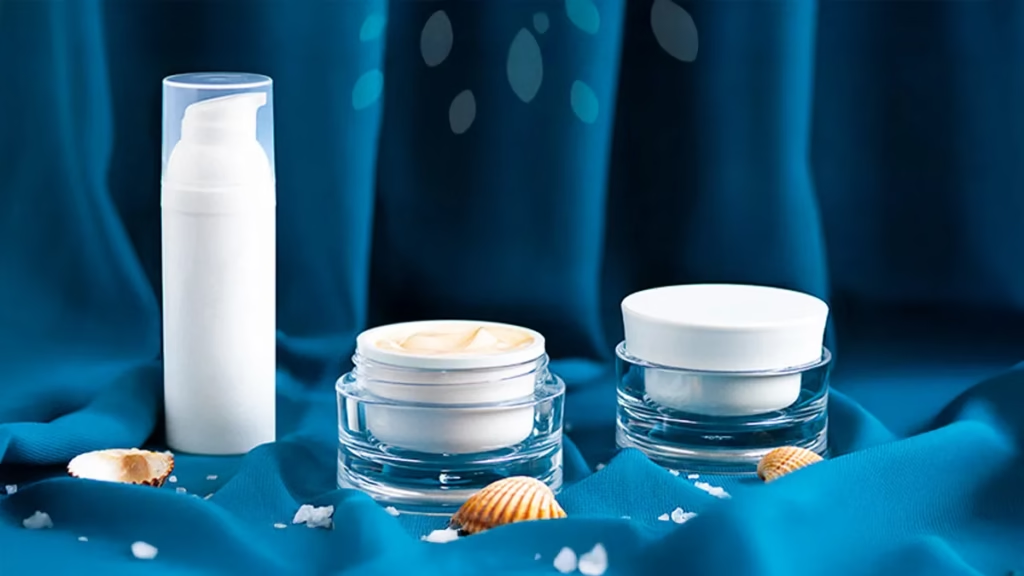
ODM is often the best balance for growing brands. It can save months. But you still need to ask the right questions.
What you should confirm with ODM
- Which parts can be changed safely (fragrance, shades, mild feel adjustments)
- Which changes are not allowed without re-testing
- Whether the base formula is already stable in the packaging you want
- Whether the supplier has a clear spec sheet for the exact version you will buy
Here is the simple rule. If you want heavy formula changes, you are not really doing ODM anymore. You are moving toward OEM, even if the supplier calls it ODM.
Private label cosmetics: fast, but do not skip the checks
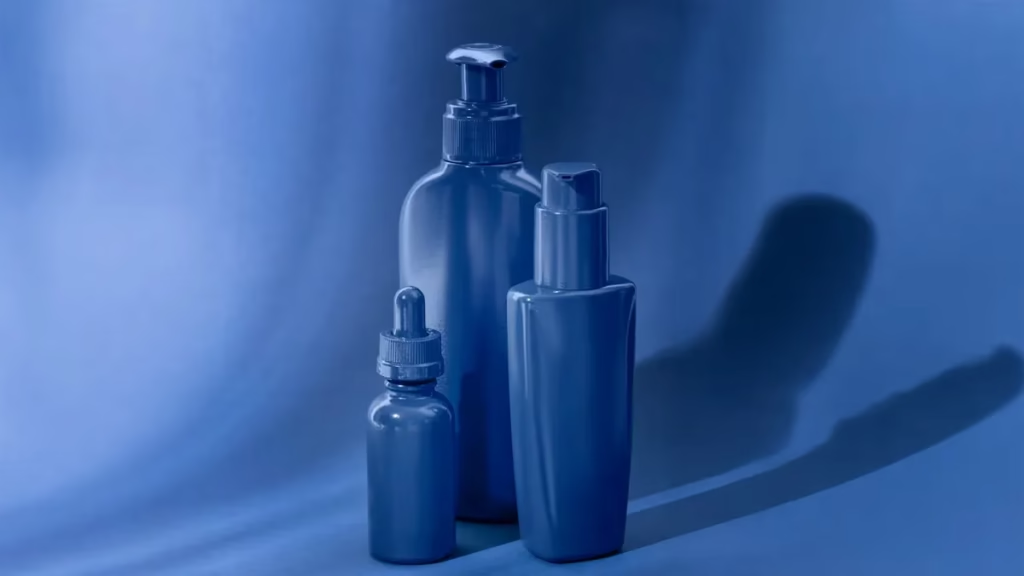
Private label sounds simple. And it can be. But you still need basic controls. A fast launch can still fail if packaging and labeling are handled loosely.
What private label can still go wrong with
- wrong label text for your sales country
- barcode issues
- incorrect net content display
- missing warnings or required language
- packaging leaks or pump fit problems
Private label is a great route if you plan to win through brand positioning, distribution, and content. It is also a smart route for clinics, spas, hotels, and online sellers who want a clean product line without long R&D cycles.
Common documents you will see (and why they matter)
Exact requirements depend on product type and where you sell. Still, these documents come up again and again in cosmetics manufacturing.
- Product specification sheet: the “definition” of what is being produced and supplied.
- INCI list: ingredient naming format used for cosmetics labeling.
- COA (Certificate of Analysis): batch-level results used for quality checks.
- Microbiology test results: supports safety and quality for many product types.
- Stability summary: shows how the product behaves over time under specific conditions.
- Packaging compatibility notes: helps prevent reactions, leaking, or dispensing failure.
- Artwork approvals: final label and box files, based on correct dielines and print specs.
- PO and proforma invoice: locks terms, quantities, packaging, timelines, and pricing.
If you sell into regulated markets, it also helps to review official cosmetics guidance. The FDA cosmetics overview is a useful starting point: FDA cosmetics information. For the EU, this overview explains the framework at a high level: European Commission cosmetics information.
OEM vs ODM vs private label cosmetics: a practical comparison table
| Factor | OEM | ODM | Private Label |
|---|---|---|---|
| Starting point | Your brief and targets | Supplier’s existing formulas | Existing product, minimal changes |
| Customization level | High | Medium | Low to medium |
| Typical timeline | Longer due to sampling and testing | Shorter if changes are limited | Often shortest |
| Best for | Brands that need differentiation | Brands that want speed plus flexibility | Brands that want quick market entry |
| Main risk area | Sampling loops and packaging compatibility | Assuming you can “customize anything” | Labeling and packaging details |
How to choose the right model without guessing
Here is a straightforward way to decide. Answer these questions honestly.
Question 1: Do you need a unique formula, or do you need speed?
- If you need a unique hero product, start with OEM.
- If you need speed and proven bases, start with ODM or private label.
Question 2: How sensitive is your timeline?
- If timing is critical, private label is often the safest path.
- If you can allow sampling rounds, OEM can be worth it.
Question 3: How complex is your packaging?
- Airless pumps, droppers, special caps, or unusual bottle shapes add risk.
- If packaging is complex, you need better compatibility checks, regardless of model.
Question 4: Are you selling in multiple countries?
If yes, you will likely need stricter control over labeling and documentation. That does not force you into OEM, but it does mean you need a stronger process.
Common mistakes that waste time (and how to avoid them)
Mistake 1: Choosing a model based on a buzzword
Some people choose OEM because it sounds premium. Others choose private label because it sounds easy. Both can be wrong. Choose based on control needs, budget, and timeline.
Mistake 2: Locking packaging after the formula
Do not treat packaging as a final step. Packaging decisions should be tested early. This reduces leaks, dispensing failures, and label problems later.
Mistake 3: Approving samples without a clear acceptance standard
Set simple acceptance rules. Define what “match” means for smell, texture, shade, and fill weight. This prevents arguments during production.
Mistake 4: Treating labels as only design
Labels are compliance and operations too. The wrong net content format or missing warnings can delay shipments or trigger relabeling costs.
Where ATC Sourcing supports the process

ATC Sourcing helps brands choose the right manufacturing route, manage sampling in a structured way, coordinate packaging and branding production, run quality checks, and coordinate delivery logistics. This is especially useful when you are launching across skincare, makeup, haircare, fragrance, and personal care categories.
If you want to understand the full scope of support, you can review ATC’s cosmetics manufacturing services. And if you want examples of product categories that can be produced and managed, see the cosmetic products portfolio.
FAQ
Is private label the same as ODM in cosmetics?
They overlap. Private label is usually an existing product with minimal changes. ODM often offers a broader catalog and may allow more customization. The real difference depends on the supplier and the allowed change level.
Which option is best for a new brand with a limited budget?
Many new brands start with private label or ODM because it reduces development time and cost. OEM can still work, but it often needs more sampling and testing, which adds cost upfront.
What is the biggest cause of delays in OEM projects?
Unclear briefs and unclear feedback during sampling. The lab needs specific direction to adjust texture, scent, and performance.
Do I need stability and compatibility testing if I choose private label?
You still need basic checks. Even with a proven formula, your chosen packaging and label materials can introduce issues. Testing helps reduce surprises after you commit to production.
What information should I send a sourcing partner to get a fast, accurate recommendation?
Send the product type, target market and country of sale, target price range, the packaging style you want, and any ingredient constraints. This is usually enough to recommend OEM vs ODM vs private label and outline next steps.